
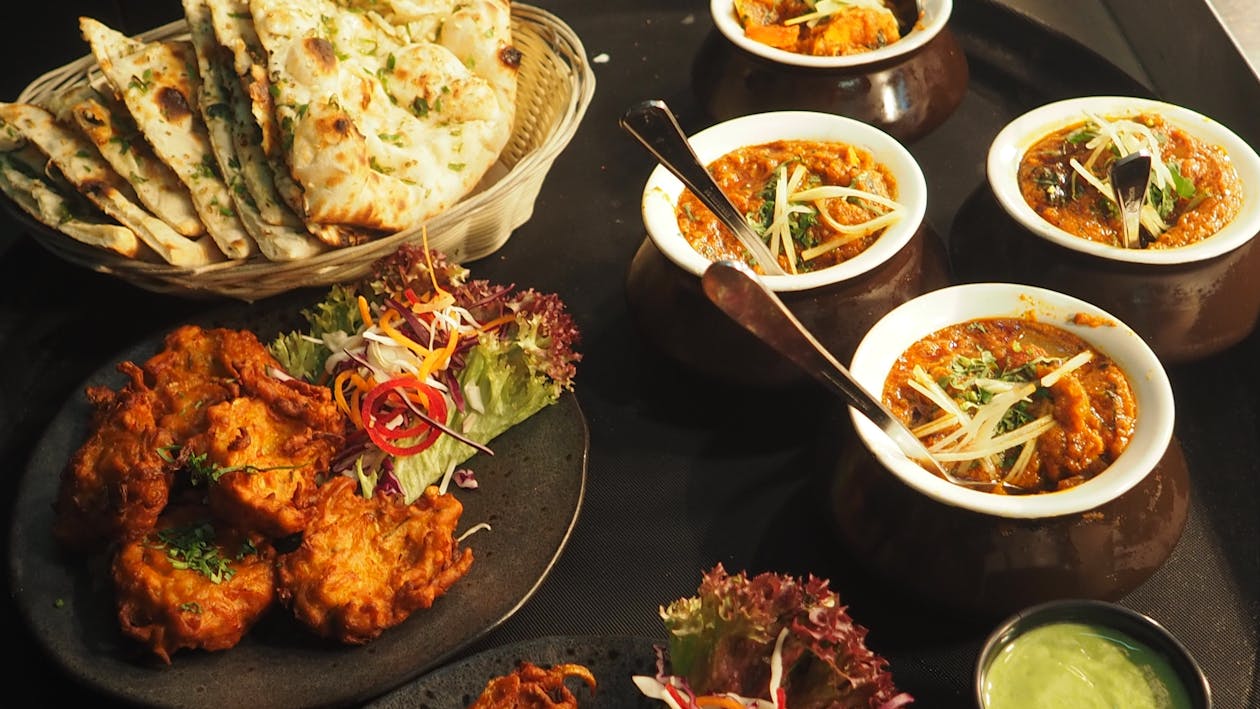
Aktar Islam, the Birmingham-based chef behind the two-Michelin-starred Opheem, opened his first London restaurant in Borough on 1 May. Named Oudh 1722, the project represents the most serious sustained attempt to bring Awadhi cuisine — the cooking tradition of Lucknow's Nawabi courts, originating in the early eighteenth century — to a London dining room at the level it deserves.
The venue occupies a listed Victorian building across three floors, seating 80 covers in a space that Islam describes as "a conversation between the architecture of South Asian craftsmanship and the bones of this extraordinary London building." The result is arresting: handmade jali screens in carved walnut, deep jewel-toned upholstery, hand-painted murals depicting scenes from Mughal-era Lucknow, and an intricate copper-leaf ceiling in the main dining room that shifts colour in the candlelight.
The Cuisine
Awadhi cooking is not new in the sense of being unfamiliar to food historians, but it is almost entirely underrepresented in the UK's Indian restaurant landscape, which has long been dominated by Punjabi, Bangladeshi and increasingly South Indian traditions. Originating in the kitchens of the Nawabs of Awadh — aristocratic rulers whose courts became famous across the subcontinent for the refinement of their cuisine — the tradition is defined by dum cooking (the slow cooking of food in sealed vessels), intricate spice layering, and a delicacy that reflects its origins in cultures of leisure and connoisseurship.
Islam has built his career on doing this kind of restoration work on Indian culinary tradition — taking cuisines that have been diminished, generalised or simply overlooked in the UK's restaurant landscape and presenting them at a level that forces reassessment. At Opheem he did that for modern Indian cooking broadly. At Oudh 1722, he narrows to a specific geography and a specific moment in culinary history.
The menu centres on dishes that define the Awadhi tradition: a galouti kebab of extraordinary fineness, made with 156 spices according to a recipe that Islam spent three years researching; a dum biryani slow-cooked in a sealed clay pot, finished tableside; and a Nahari — the slow-braised bone-in lamb dish that has been eaten at dawn in Lucknow for three hundred years. A nihari here is not the takeaway version. It is a revelation.
Early Reception
Early weeks of service suggest that both press and diners are responding with exactly the kind of attention this level of ambition warrants. Reservations for May filled within days of the booking window opening. A second seating rotation has been added at the weekend.
"I spent fifteen years in Birmingham building the credibility to do this properly," Islam said. "Oudh 1722 is not Opheem in London. It is its own project — rooted in one specific culinary tradition, told with as much depth and rigour as I can bring to it. Awadhi cuisine deserves that. It has been waiting for it."
Borough as a Destination
Islam's choice of Borough over the more obvious Mayfair or Fitzrovia location is deliberate. Borough has spent a decade building a credibility as a destination for serious food — the market, Brat's former outpost, Trivet, the quality of the neighbourhood's food culture at multiple price points — that Mayfair, despite its resources, often lacks. The footfall that arrives in Borough has already demonstrated that it will travel for food that is worth the journey.
Oudh 1722 is open Tuesday to Sunday, lunch from 12pm and dinner from 6pm. A shorter lunchtime menu is available at £45 for three courses. The full evening menu is £85 per person, with a drinks list developed by a specialist focused on Indian-origin beverages and natural wines from biodynamic producers.