Wild garlic — Allium ursinum — appears in British woodlands and hedgerows from late February and runs through to the end of May. It looks like lily of the valley (which is poisonous — always forage carefully or buy from a trusted supplier), smells unmistakably of garlic, and has a flavour that is softer and greener than cultivated garlic with none of the harshness.
It is one of the best seasonal ingredients available to UK chefs right now, and it is criminally underused outside of fine dining. This recipe is a case for putting it on a bistro, pub or casual dining menu with minimal investment and maximum return.
Serves: 4 Prep: 15 minutes Cook: 12 minutes
Ingredients
- 400g dried pappardelle (or fresh, if you have it — reduce cook time accordingly)
- 100g unsalted butter
- 80g wild garlic leaves, washed and roughly torn
- 60g aged Parmesan, finely grated, plus extra to serve
- 40g pine nuts
- 1 unwaxed lemon, zest and juice
- Flaked sea salt and white pepper
Method
1. Toast the pine nuts
Put the pine nuts in a dry frying pan over a medium heat and toast, stirring regularly, until golden brown — around 3 to 4 minutes. Watch them carefully; they go from golden to burnt in seconds. Tip onto a plate and set aside.
2. Cook the pasta
Bring a large pan of heavily salted water to a rolling boil. Cook the pappardelle according to packet instructions until al dente. Before draining, reserve a full mug of pasta cooking water — you will need it. Drain the pasta.
3. Make the wild garlic brown butter
While the pasta cooks, melt the butter in a wide, heavy-based pan over a medium heat. Once the butter foams, reduce the heat slightly and continue cooking, swirling the pan occasionally, until the butter turns a deep golden brown and smells nutty — around 4 to 5 minutes. Remove from the heat immediately. Add the torn wild garlic leaves directly to the hot butter; they will wilt almost instantly from the residual heat and the kitchen will smell extraordinary.
4. Bring it together
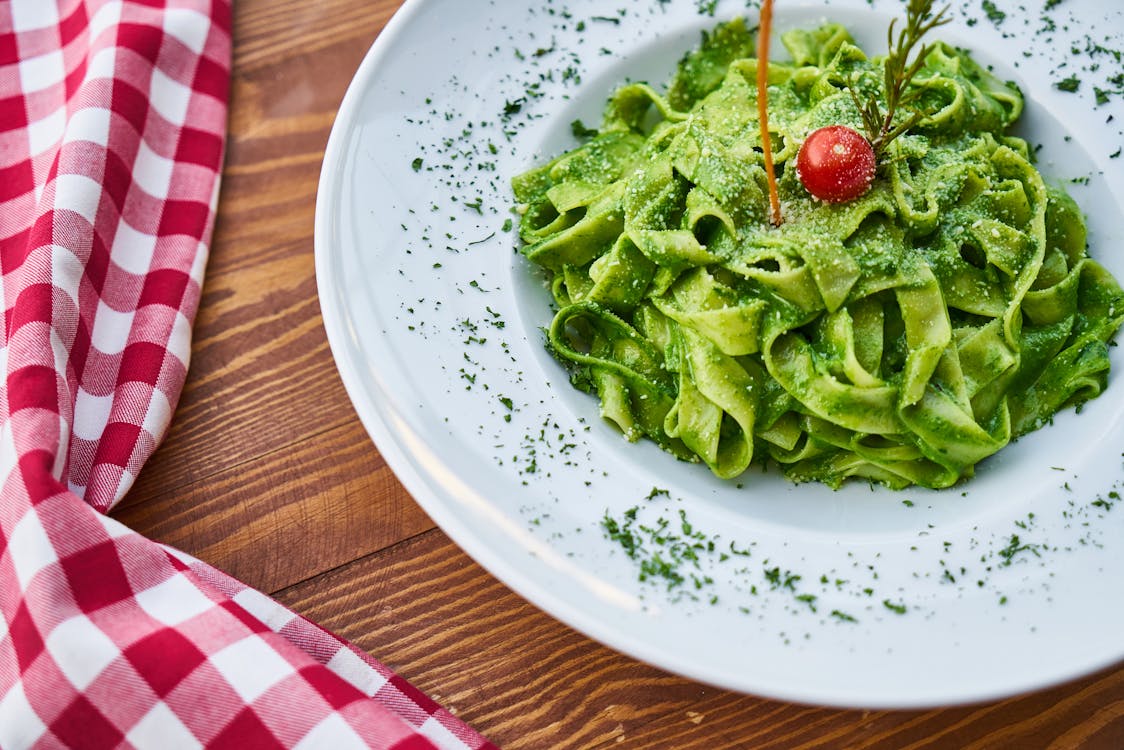
Return the pan with the wild garlic butter to a low heat. Add the drained pappardelle and toss to coat, adding pasta water a splash at a time to loosen the sauce to a consistency that coats the ribbons without pooling at the bottom of the plate. Add the Parmesan and toss again — it will melt into the butter and pasta water to form a glossy emulsion. Season with lemon zest, a squeeze of lemon juice, flaked sea salt and white pepper.
5. Plate and finish
Divide between warm bowls. Scatter over the toasted pine nuts and a little extra Parmesan. Serve immediately.
Chef Notes
Wild garlic sourcing: A number of specialist UK suppliers now offer wild garlic through wholesale channels from late February. Natoora, The Wasabi Company and several regional farm box schemes carry it reliably through April. Foraged supply should be verified carefully — buy from a supplier whose provenance you trust rather than relying on foraged product of uncertain origin.
On the pasta: Pappardelle works well because the wide ribbons carry the butter sauce and hold the weight of the wild garlic without breaking. Fresh egg pappardelle will take 2 to 3 minutes to cook; dried will take 8 to 11 minutes depending on brand. Either works — fresh is worth the effort if you have the capacity.
Scaling for service: The recipe scales cleanly for restaurant volumes. Brown the butter and prepare the wild garlic leaves in advance; finish to order. The wild garlic flavour is best within a couple of days of purchase — it softens and loses its brightness in the fridge beyond that.
Variations: A tablespoon of wild garlic pesto stirred through at the end adds intensity. A cracked egg yolk placed in the centre of the bowl before service adds richness and transforms this into a more substantial main course. Crispy guanciale or pancetta is a natural partner if you are serving a mixed menu.